
The Hatchery
Yellow Island Aquaculture initiated and developed our hatchery program in 1985.
From the start, we have been committed to promoting animal welfare and optimizing product quality through development of local stocks, and micro-adaptations to the immediate environment.
Only local, native Pacific salmon species (Chinook, King, Spring salmon)
No antibiotics, hormones, growth stimulants or chemical therapeutants used for over 25 years Organically Certified feed
All of our animals, including our broodstock fish, are reared with natural/organic methods in an exceptional environment throughout their entire life cycle
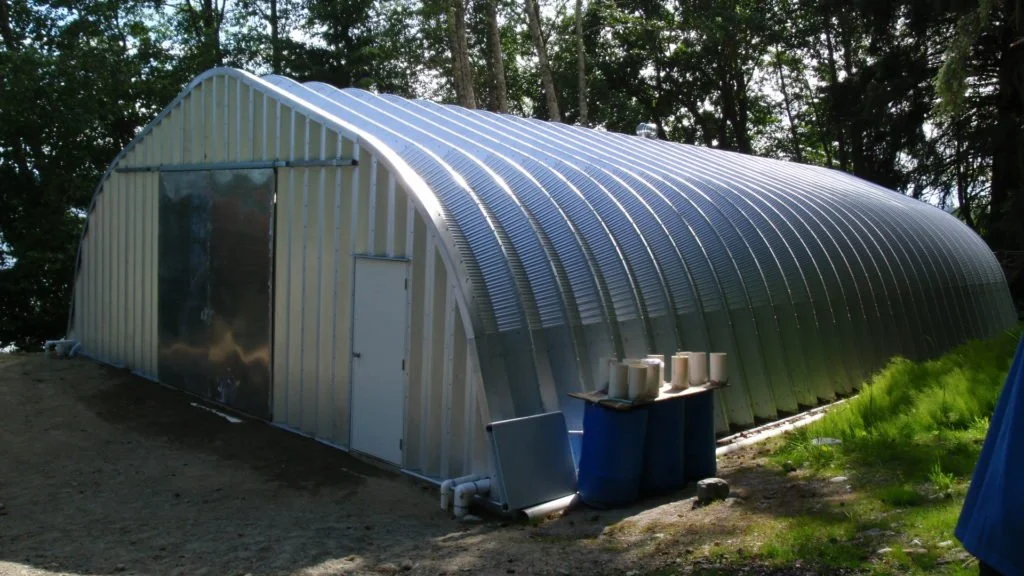
Yellow Island’s hatchery provides abundant water from a deep freshwater well which is used in rearing the animals. The use of well water minimizes the possibility of introducing any infectious agents or contaminants.
The hatchery is partially recirculating to control water use and permit it to be sustaining. The well water has been extensively tested over the years and found to be free of contaminants and suitable for fish habitat.
Our Yellow Island hatchery water comes from a deep aquifer. As is typical in these circumstances, it is low in oxygen and supersaturated with nitrogen and requires a header pond for de-gassing and oxygenation.
The use of well water minimizes the possibility of introducing any infectious agents and the water condition remains constant throughout the freshwater life of the animals.
The hatchery was originally conceived to meet the production demands of our small fish farm operation and as a result has a maximum biomass of approximately to 2500 kg. This means there is no impact on the adjacent waterways or on the ocean.
Subsequently the company added a small research hatchery facility because of the demand for space and for small rearing enclosures for scientific purposes. The company also developed natural environment spawning channels to further the development of our broodstock through natural selection techniques. Due to increases in the efficiency of our production over time these facilities were incorporated within the water management footprint of our current hatchery.
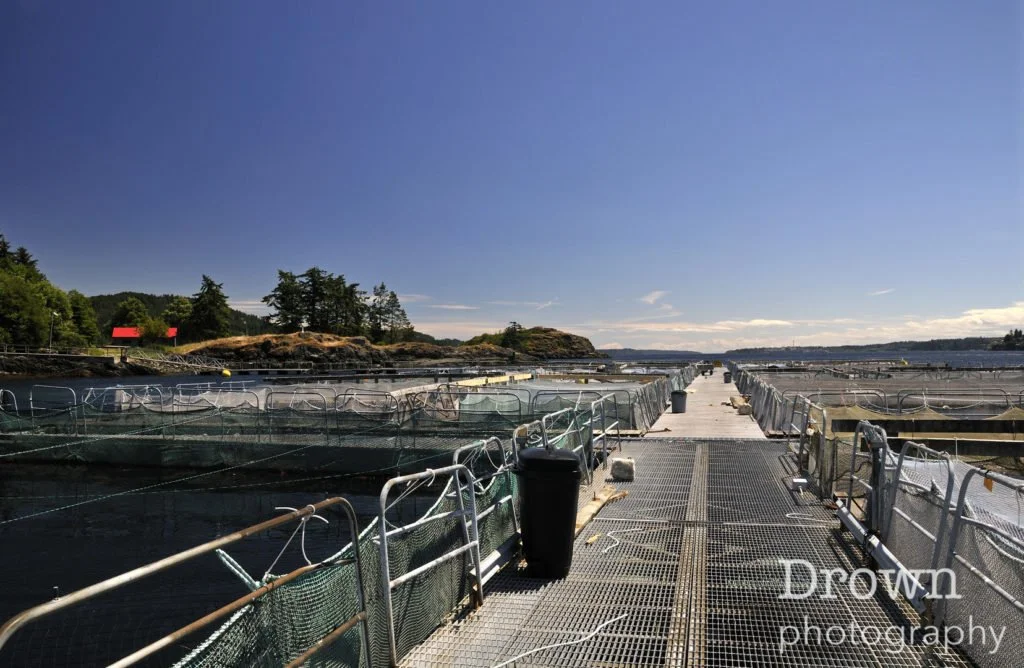
Yellow Island broodfish are sourced exclusively from our production facility, located 100M from the hatchery.
Broodstock are transported to the hatchery in small numbers, where they are kept in freshwater spawning channels until they reach an optimal state of maturation. They are then transported in small batches to the hatchery.
Broodstock
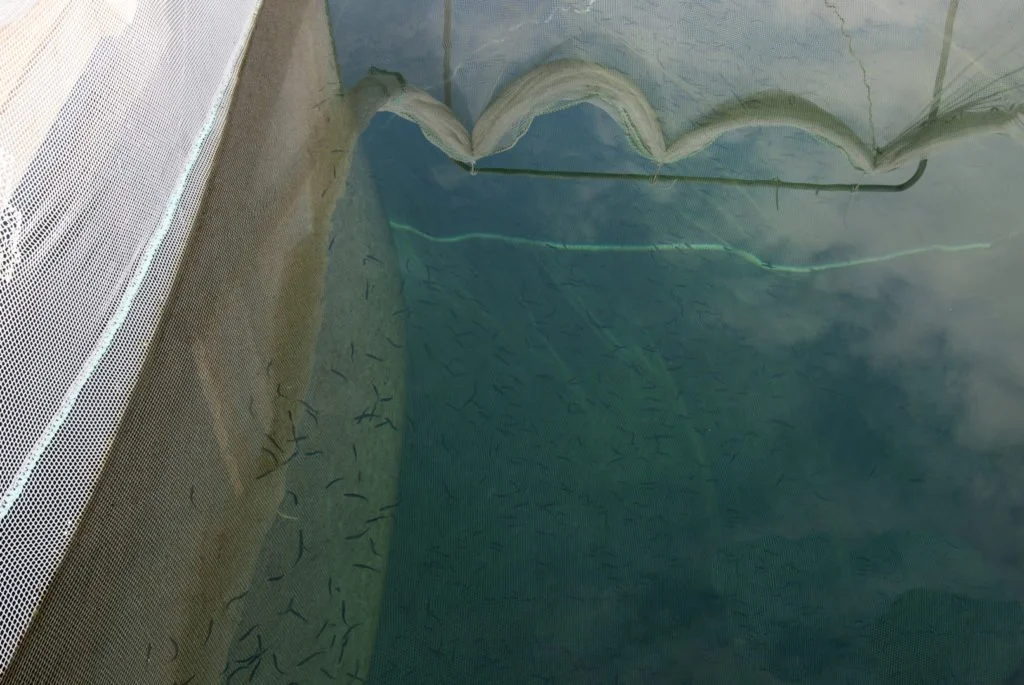
Swim-up fry are fed organic diets for the entire duration of their growth. The hatchery has been instrumental in promoting our organic development program as it permits us to specifically breed and develop the crosses necessary to sustain organic rearing of the animals throughout their life cycle, as well as enabling the basic research which supports the organic program at the facility.
Fry
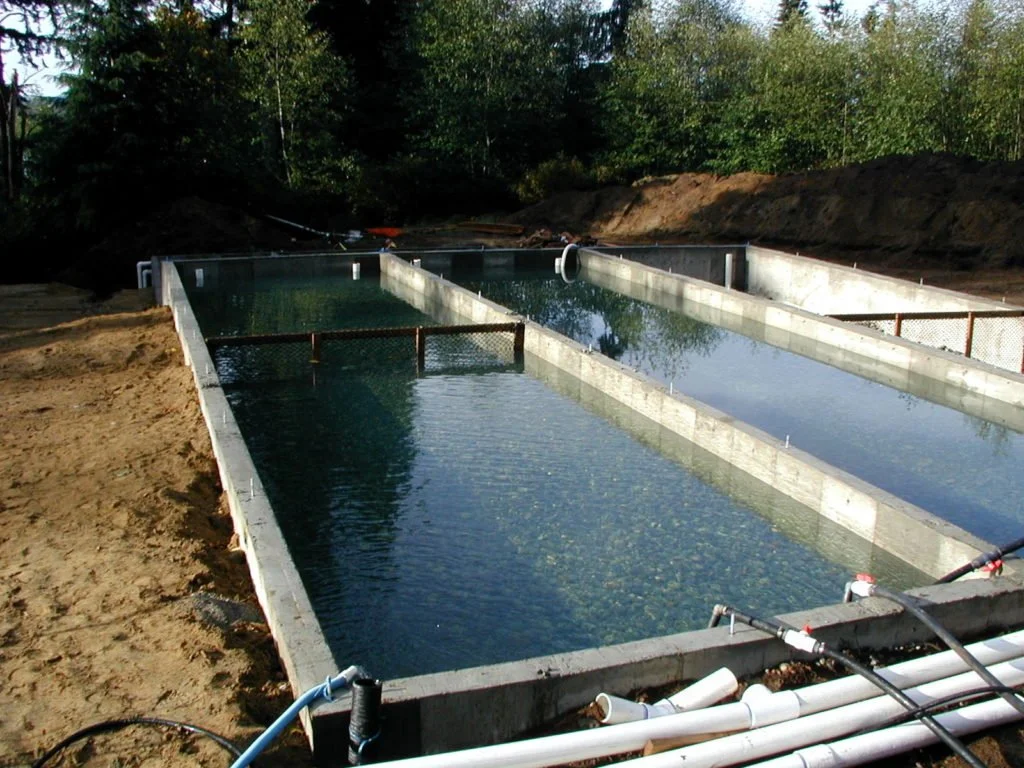
We have developed natural environment spawning channels to further the development of our brood stock through natural selection techniques.
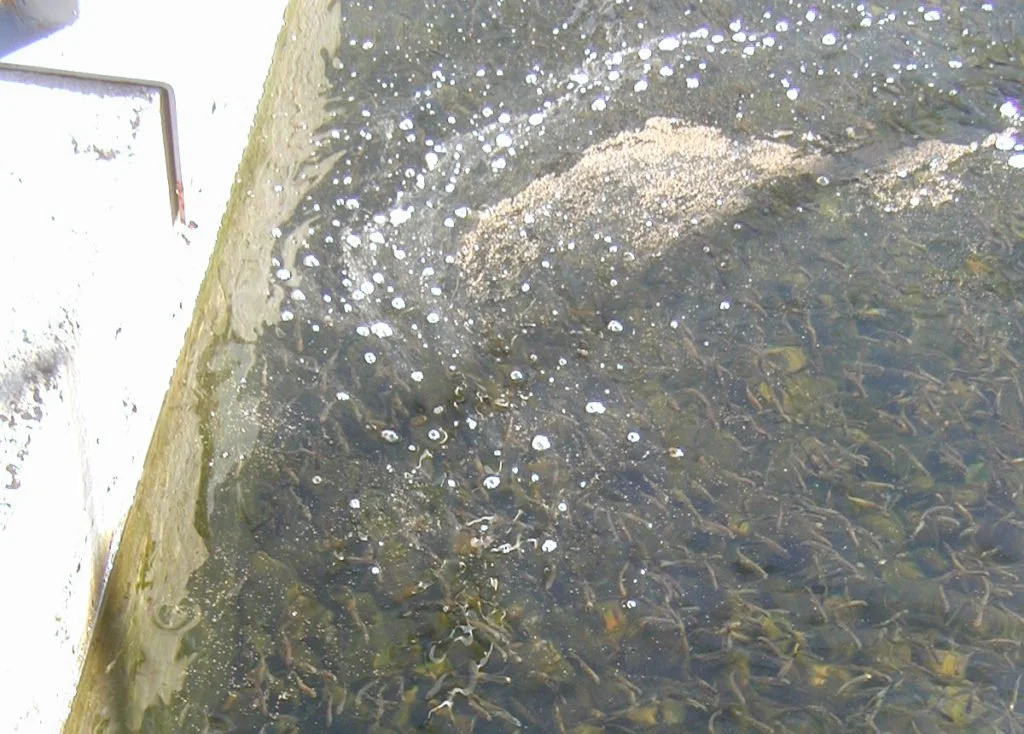
Egg Take
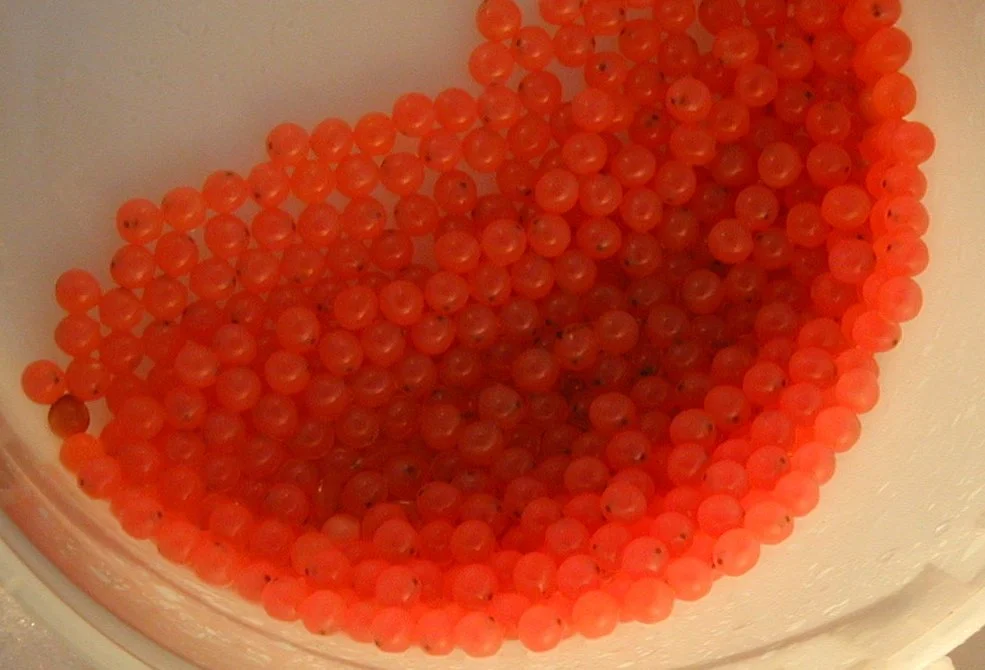
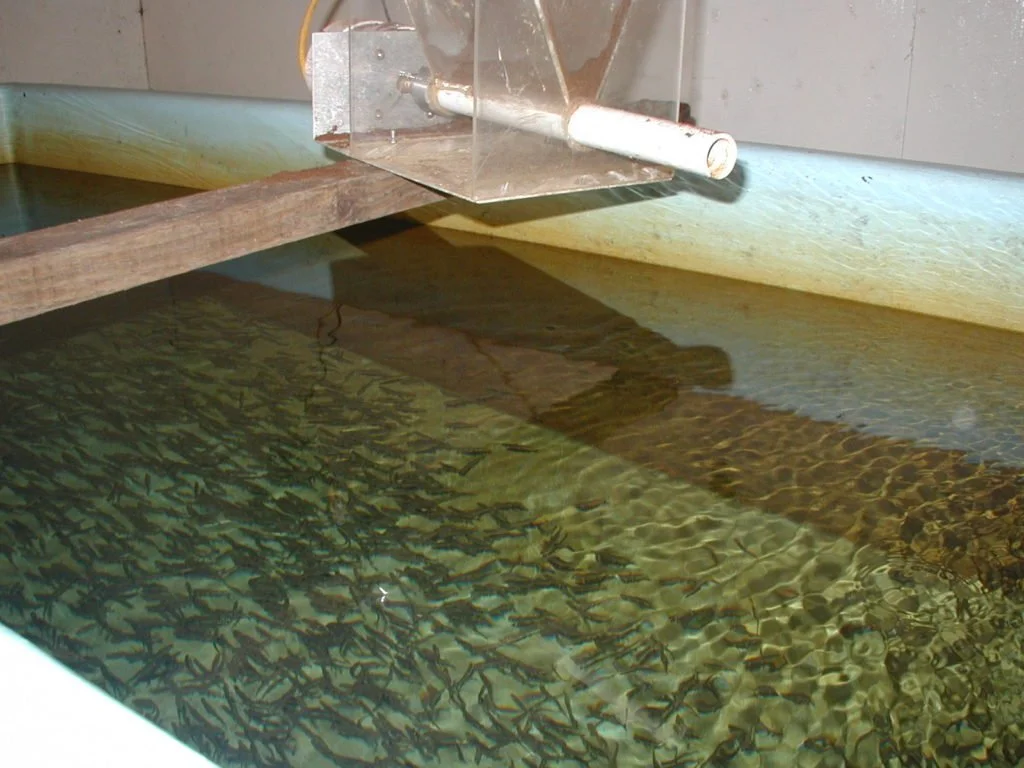
Some of the embryos are treated with a pressure shock technique in a custom designed cylinder in order to induce triploidy (three sets of chromosomes). Triploidy occurs naturally in the wild, and for rearing purposes it results in slower maturation and greater disease resistance in our stock. The hatchery does not use any chemicals for sterilization or treatment of the eggs. Instead, eggs are routinely flushed with saltwater to control Saprolegnia fungus, a common problem in all hatchery systems. After hatching, the animals are then reared according to conventional techniques in Heath trays and subsequently introduced to larger troughs until they reach the smolt stage.
Yellow Island Aquaculture has always been interested in cultivating the adaptive characteristics that are present in the native species of salmon in the area. We have had long-standing concerns about the potential effects of artificial selection in the spawning process, as well as early rearing of the animals in hatchery scenarios. Yellow Island research published in the prestigious journal Science showed at least one parameter in which these concerns were well grounded, namely the resultant size of progeny eggs.
We hypothesized that creating a spawning and early rearing environment which allowed free assortative mating and natural early rearing conditions would maximize the ability of the animals to adapt to their environment. In order to test this formally and to evaluate which components would offer most potential benefits we constructed a set of six natural rearing habitats in which the salmon could assort naturally, and the fry could be reared in a broadly normal environment.
The spawning channels consist of six independent rectangular shaped rearing channels each measuring 16 m long by 4 m wide by 1.5 m deep. Channels can be filled with substrate, the size of which can be varied if required. The entire structure is fenced with rigid Vexar netting to a height of 1.5 m, and integrated shade cover is used to naturalize the environment, minimize algae growth, and discourage bird predation. Inflow water comes from a deep well aquifer, which is de-gassed and oxygenated in a header pond and controlled by valves at the head of the channels. The majority of water flow is provided by three large recirculating pumps with oxygenation in between each set of channels. Water flows and levels are controlled by the degree of recirculation, adjusted by valves on each channel. Water depth in the channels can also be controlled by standpipes at the bottom of each channel. Temperature in the channels is modulated by adjusting the degree of inflow.
These channels have been used in many major experiments, and we have already seen results which indicate that assortative mating is a key factor in maintaining immune competence, normal behaviours, and normal selective pressures in the stocks. We have also been able to identify and document a number of other aspects of breeding behaviour, and in fact we were the first to rigorously document that spawning salmon do not stop eating completely, as was widely believed by the scientific community. In fact, the animals will eat fish eggs in the water column, including their own, even as they senesce. These data shed light on a long-standing mystery in the wild of how anadromous salmon can travel as much as 2000 km in distance and up to 1600 m in elevation to the headwaters of the Fraser River, while maintaining sufficient energy stores to spawn at the end of their journey.
In our ongoing efforts to support research on Chinook salmon and aquaculture more broadly, Yellow Island continues to develop and maintain a mono-sex population of naturally spawned animals over several generations to evaluate whether the selective advantages of assortative mating will become more evident over multiple generations of selective breeding.
In addition to the scientific utility of the channels, we also hope that they can eventually provide proof of concept for a more economical, freshwater alternative to saltwater operations in the propagation of production and broodstock animals.